


 Parent Handbook (246 Kb)
 download
 Child Care Checklist (95 KB)
 Agreement Form (94 KB)
 Monthly Billing Chart (95 KB)
 NS-11B, Block-E, Beta 1, Greater Noida, 201310
 +91 87500 00384
 official@kidzeebetal.com
 Mon-Fri: 9:00 am – 5:00 pm

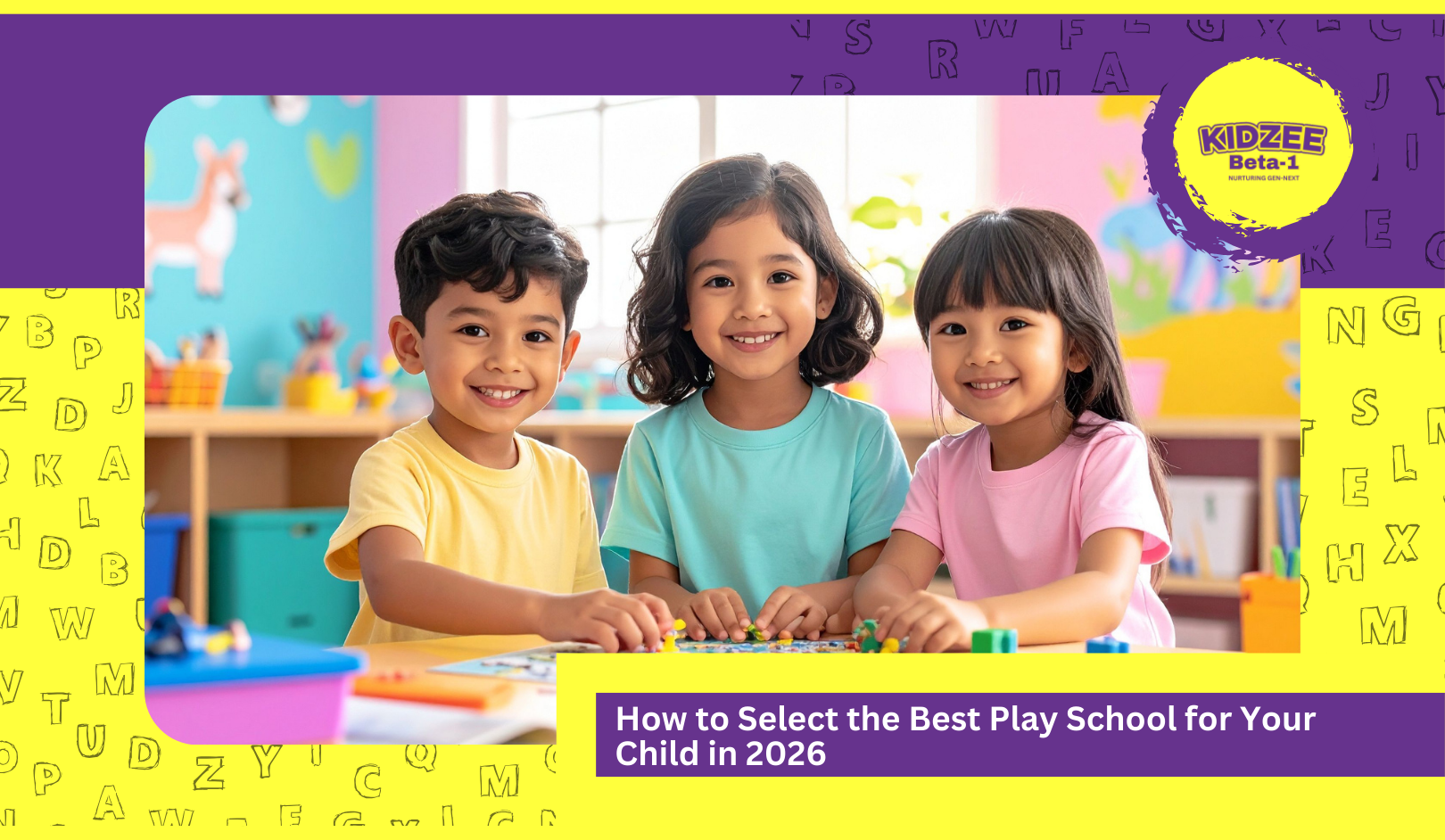
How to Select the Best Play School for Your Child in 2026
Choosing the right play school for your child is one of the most significant decisions you’ll make as a parent. It lays the foundation for their early learning experiences and future academic success. In 2026, there are more options than ever for parents in Greater Noida, and selecting the best play school requires thoughtful consideration. Kidzee Beta 1 is one of the best play schools in Greater Noida, offering a balanced approach to early childhood education with a focus on holistic development.
In this article, we will walk you through the essential factors to consider while selecting the best play school for your child in 2026. Whether you’re a first-time parent or are looking to make a change, we’ve got you covered with a comprehensive guide.
1. Understanding the Importance of Early Childhood Education
Before diving into the specifics of choosing a play school, it’s important to understand why early childhood education is so vital. Research consistently shows that children who attend quality play schools are better prepared for future learning and social interactions. In the early years, children develop cognitive, emotional, and social skills that form the basis for their overall development.
Benefits of Early Education:
-
Cognitive Development: Learning basic concepts like shapes, numbers, and letters.
-
Social Skills: Interaction with peers teaches sharing, taking turns, and collaboration.
-
Emotional Development: Early exposure to a structured environment builds resilience and confidence.
2. Factors to Consider When Selecting the Best Play School
Selecting the right play school for your child goes beyond choosing a place with good facilities. Here are key factors to keep in mind:
A. Curriculum and Pedagogy
The curriculum offered by a play school plays a pivotal role in your child’s development. It should be well-rounded, engaging, and designed to stimulate curiosity and creativity. In 2026, many play schools, including Kidzee Beta 1, follow progressive teaching methodologies like:
-
Montessori: Focuses on self-directed learning and exploration.
-
Reggio Emilia: Encourages creativity and the development of critical thinking skills.
-
Play-Based Learning: Emphasizes learning through play, fostering both cognitive and social skills.
Kidzee Beta 1 combines these methodologies to ensure that children develop at their own pace, while also being exposed to foundational learning in a fun and engaging way.
B. Teacher-Student Ratio
The teacher-student ratio is an important factor that can affect the quality of your child’s learning experience. A low teacher-to-student ratio ensures personalized attention and better monitoring of each child’s progress. Look for play schools that offer individual care and a ratio that supports optimal learning.
C. Infrastructure and Facilities
When choosing a play school, the infrastructure and facilities matter greatly. A clean, safe, and child-friendly environment is essential. Key factors to consider include:
-
Safety: Ensure that the school follows strict safety protocols, with secure entrances and age-appropriate playground equipment.
-
Classroom Design: Spacious classrooms with natural lighting and ventilation are essential.
-
Outdoor Play Area: A well-equipped outdoor area encourages physical activity and social interaction.
At Kidzee Beta 1, classrooms are designed to be interactive, bright, and playful, providing a nurturing environment for children to explore.
D. Teaching Staff and Qualifications
A dedicated and qualified teaching staff is crucial for your child’s learning. In 2026, look for play schools that emphasize continuous teacher training and professional development. Teachers should not only be qualified but also compassionate, patient, and enthusiastic about working with young children.
At Kidzee Beta 1, all teachers are certified and have received training in modern pedagogies to provide the best learning experience for your child.
E. Parental Involvement
The best play schools actively involve parents in their child's educational journey. Look for schools that maintain an open line of communication with parents, offering regular updates, parent-teacher meetings, and feedback sessions. This collaboration ensures that you are part of your child’s development and can address any concerns promptly.
3. Modern Trends in Play School Selection (2026)
In 2026, the selection criteria for play schools have evolved, reflecting the changes in education and parenting styles. Some of the latest trends include:
A. Focus on Mental and Emotional Well-Being
With growing awareness about mental health, play schools in 2026, like Kidzee Beta 1, are focusing on developing emotional intelligence, mindfulness, and stress management techniques at an early age.
B. Digital Integration
While traditional play schools still dominate, there is a gradual shift towards digital learning tools in some institutions. Interactive apps and smart learning devices can complement traditional learning methods and enhance engagement.
C. Sustainable and Green Practices
Sustainability is a key consideration in 2026. Parents today are more conscious about their children’s future, and schools with green practices, such as energy-efficient buildings, eco-friendly materials, and waste reduction efforts, are becoming more popular.
4. How to Visit and Assess a Play School
When you’ve shortlisted a few play schools, it’s important to visit them in person to get a feel for the environment. Here’s what to look out for during your visit:
-
Observe the Environment: Is the place welcoming, safe, and clean?
-
Talk to Teachers: Engage with teachers to understand their approach to teaching and discipline.
-
Review the Curriculum: Ask about the daily schedule, learning activities, and child engagement strategies.
-
Interact with Children: Observe how children interact with the teachers and their peers.
5. Questions to Ask When Choosing a Play School
Here are some questions to ask during your visit or while communicating with the school:
-
What is the teacher-student ratio?
-
What is the daily schedule like for children?
-
How do you handle behavioral issues or conflicts among children?
-
What is the school’s approach to teaching and discipline?
-
How do you incorporate creativity and physical activity into the curriculum?
6. FAQs About Selecting the Best Play School
Q1: What age should my child start attending a play school?
A1: Typically, children begin play school at the age of 2. However, it depends on the individual development and readiness of your child.
Q2: How do I know if my child is ready for play school?
A2: Signs that your child may be ready include a desire to interact with peers, an interest in structured play, and some ability to follow basic instructions.
Q3: How do I choose between Montessori and traditional play schools?
A3: Montessori schools focus on self-directed learning, while traditional schools provide more structured lessons. It depends on your child’s learning style and your preference for hands-on learning versus guided instruction.
Q4: Is it necessary for play schools to provide a meal?
A4: While not all play schools offer meals, many schools do provide healthy snacks or meals to ensure children have the energy they need for the day.
Conclusion
Selecting the best play school for your child in 2026 requires careful consideration of various factors, including the curriculum, infrastructure, teaching staff, and modern trends in early childhood education. Kidzee Beta 1 in Greater Noida stands out as a top choice for parents who seek an all-encompassing, nurturing, and child-centric environment.
By keeping these factors in mind and asking the right questions, you can ensure that your child’s early learning experience sets them up for a lifetime of success.