


 Parent Handbook (246 Kb)
 download
 Child Care Checklist (95 KB)
 Agreement Form (94 KB)
 Monthly Billing Chart (95 KB)
 NS-11B, Block-E, Beta 1, Greater Noida, 201310
 +91 87500 00384
 official@kidzeebetal.com
 Mon-Fri: 9:00 am – 5:00 pm

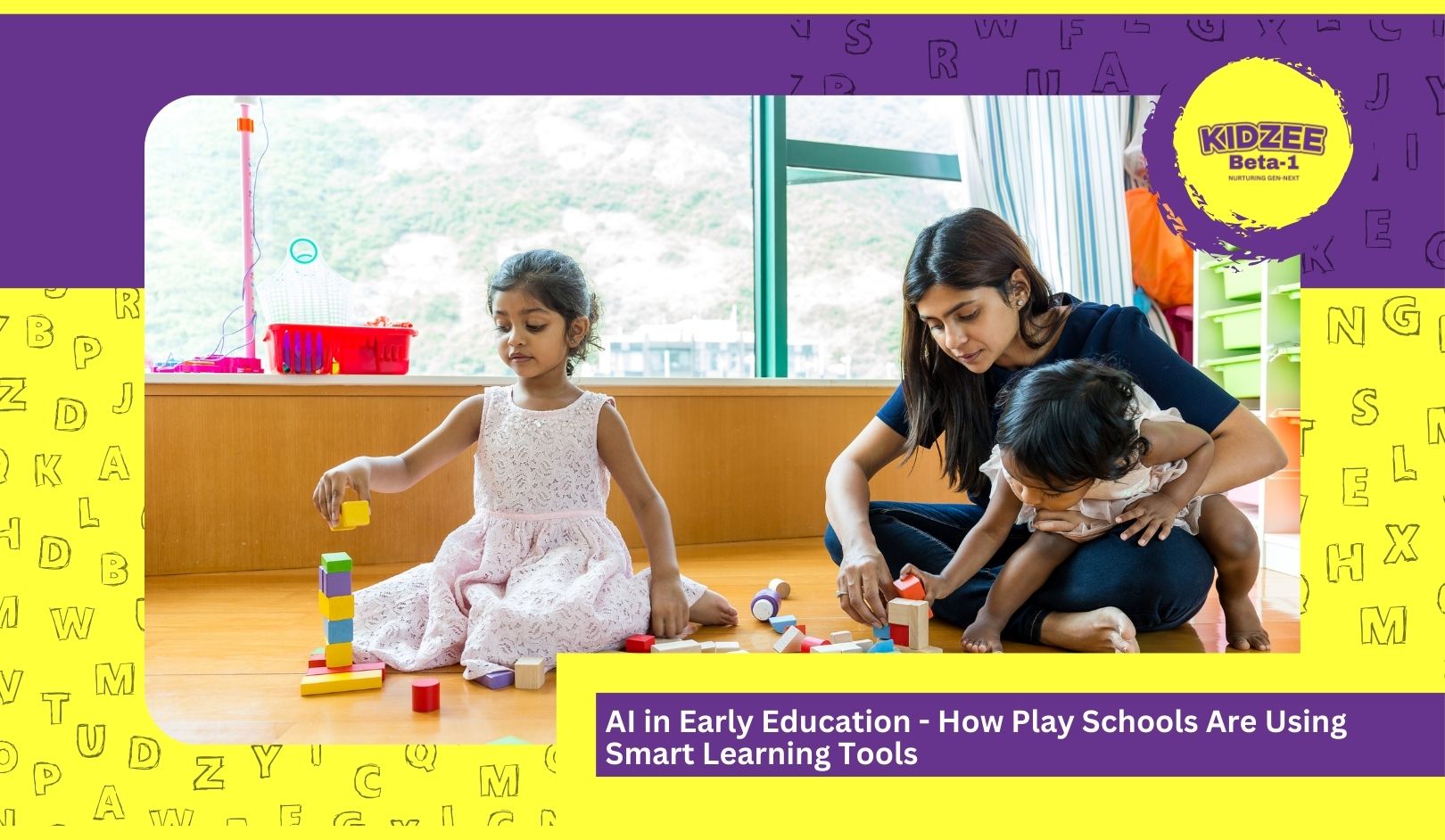
AI in Early Education - How Play Schools Are Using Smart Learning Tools
The world our children are growing up in is changing faster than ever before. Artificial Intelligence (AI), once considered a concept reserved for scientists and tech companies, has quietly become part of everyday life—from voice assistants and smart devices to personalized recommendations and automated systems. Naturally, this technological shift is now influencing the way children learn, explore, and interact with the world around them.
In early education, especially at the play school level, the goal has always been to nurture curiosity, creativity, confidence, and foundational skills. Today, modern play schools are discovering that AI-powered smart learning tools, when used thoughtfully and responsibly, can enhance traditional play-based learning rather than replace it.
At Kidzee Beta 1, Greater Noida, early education is evolving with the times—embracing innovation while staying rooted in child-centric values.
Understanding AI in the Context of Early Education
Before diving into applications, it’s important to clarify what AI in early education actually means.
AI in play schools does not involve robots teaching children or replacing teachers. Instead, it refers to intelligent digital tools and systems that support learning by:
-
Adapting content to a child’s pace
-
Offering interactive experiences
-
Helping teachers track progress
-
Enhancing engagement through visuals, sound, and movement
In early childhood settings, AI is used subtly, gently, and responsibly—always under the guidance of trained educators.
Why Early Education Is Embracing Smart Learning Tools
1. Every Child Learns Differently
Some children learn by listening, others by watching, moving, or doing. Smart learning tools can adjust activities based on how a child responds, helping each learner progress comfortably.
2. Attention Spans Are Changing
Young children today are surrounded by digital stimuli. Smart tools help educators present learning in ways that feel natural and engaging—without overwhelming the child.
3. Preparing Children for a Digital Future
Basic familiarity with technology, problem-solving, and logical thinking prepares children for future academic environments.
4. Supporting Teachers, Not Replacing Them
AI tools reduce repetitive tasks like manual tracking and allow teachers to focus more on emotional support, creativity, and interaction.
How Play Schools Use AI Without Losing the ‘Play’
One of the biggest concerns parents have is:
“Will technology take away real play and human interaction?”
The answer lies in balanced integration.
At Kidzee Beta 1, AI-enabled tools are used to:
-
Complement physical activities
-
Enhance storytelling and visual learning
-
Support skill development through guided interaction
-
Encourage exploration, not passive screen time
Play remains the foundation—technology simply enhances the experience.
Smart Learning Tools Used in Modern Play Schools
1. Interactive Smart Boards
Smart boards turn lessons into interactive experiences:
-
Touch-based storytelling
-
Animated alphabets and numbers
-
Group problem-solving games
-
Visual explanations for concepts
Children don’t just watch—they participate.
2. AI-Powered Learning Apps (Teacher-Guided)
These apps adapt difficulty levels based on a child’s responses:
-
Phonics recognition
-
Early math patterns
-
Color and shape identification
-
Memory and logic games
Teachers monitor and guide usage carefully.
3. Voice-Based Learning Assistants
Simple voice-enabled tools help children:
-
Learn pronunciation
-
Listen to stories
-
Ask questions in a natural way
This improves language skills and confidence.
4. Adaptive Learning Platforms
AI systems track:
-
Attention span
-
Learning speed
-
Areas needing reinforcement
This helps teachers personalize activities for each child.
5. Digital Storytelling Tools
Stories come alive with animations, sounds, and characters:
-
Enhances imagination
-
Improves listening skills
-
Encourages emotional understanding
Stories are still guided by teachers—technology enhances expression.
AI and Emotional Intelligence in Early Learning
Contrary to common belief, AI tools can support emotional learning when used correctly.
Emotion Recognition Activities
Interactive games help children:
-
Identify facial expressions
-
Understand emotions like happiness, sadness, anger
-
Learn empathy through stories
Mindfulness and Calm Activities
AI-enabled visuals and sound-based exercises help:
-
Reduce anxiety
-
Improve focus
-
Teach emotional regulation
Teachers always lead these sessions to ensure balance.
Role of Teachers in AI-Enabled Classrooms
Technology does not replace educators—it empowers them.
Teachers at Kidzee Beta 1:
-
Curate age-appropriate digital content
-
Observe real-time progress insights
-
Adjust teaching strategies based on data
-
Focus more on creativity, communication, and care
AI handles insights; teachers handle hearts.
Safety, Privacy, and Screen-Time Balance
Responsible use of AI is essential in early education.
Key Safety Measures
-
No unsupervised device usage
-
Limited screen exposure
-
Secure platforms with child data protection
-
Offline activities remain the priority
At Kidzee Beta 1, technology follows strict child-safety and ethical guidelines.
AI and Foundational Skill Development
Language and Communication
-
Pronunciation support
-
Vocabulary building
-
Story comprehension
Numeracy Skills
-
Pattern recognition
-
Counting games
-
Shape and size concepts
Cognitive Development
-
Memory challenges
-
Logical sequencing
-
Problem-solving exercises
Creativity
-
Digital art tools
-
Music and rhythm exploration
-
Interactive storytelling
All learning remains play-based.
How AI Supports Inclusive Learning
Every classroom has children with different needs.
AI tools help:
-
Children who need extra repetition
-
Shy learners who hesitate to speak
-
Fast learners who need more challenge
-
Children with learning delays
This creates a more inclusive and supportive environment.
Parental Involvement Through Smart Tools
AI also bridges the gap between school and home.
Parents can:
-
Receive learning updates
-
Understand progress areas
-
Support activities at home
-
Communicate better with teachers
Transparency builds trust.
Myths About AI in Play Schools—Debunked
Myth 1: AI replaces teachers
Truth: AI supports teachers—it cannot replace human care.
Myth 2: Children become screen-addicted
Truth: Screen time is limited and guided.
Myth 3: AI is too complex for young kids
Truth: Tools are designed specifically for early learners.
Myth 4: Traditional learning disappears
Truth: Play, storytelling, and physical activities remain central.
Preparing Children for Future Learning Environments
AI exposure in play schools helps children:
-
Develop confidence with new tools
-
Adapt to digital classrooms later
-
Improve problem-solving skills
-
Become independent learners
These skills are essential for tomorrow’s schools.
The Kidzee Beta 1 Approach: Innovation with Heart
At Kidzee Beta 1, Greater Noida, AI is not a trend—it’s a thoughtfully integrated tool.
The focus remains on:
-
Child safety
-
Emotional wellbeing
-
Learning through play
-
Teacher-led experiences
-
Balanced digital exposure
Technology is used only when it adds value.
The Role of Parents in AI-Enabled Learning
Parents play a crucial role by:
-
Encouraging curiosity, not pressure
-
Supporting balanced routines at home
-
Limiting unsupervised screen use
-
Engaging in conversations about learning
School and home work together.
Future Trends in AI for Early Education
Looking ahead, play schools may see:
-
Smarter personalized learning paths
-
Better emotional intelligence tools
-
Enhanced teacher support systems
-
Stronger parent-school collaboration
The future is not about more screens—it’s about smarter learning experiences.
Conclusion: A Smart Start for a Bright Future
AI in early education is not about rushing children into technology—it’s about using intelligent tools to nurture natural learning.
At Kidzee Beta 1, the goal is clear:
-
Keep childhood joyful
-
Make learning meaningful
-
Prepare children gently for the future
By blending play, care, creativity, and smart learning tools, modern play schools are shaping confident, curious, and capable young learners—ready for a world that’s constantly evolving.